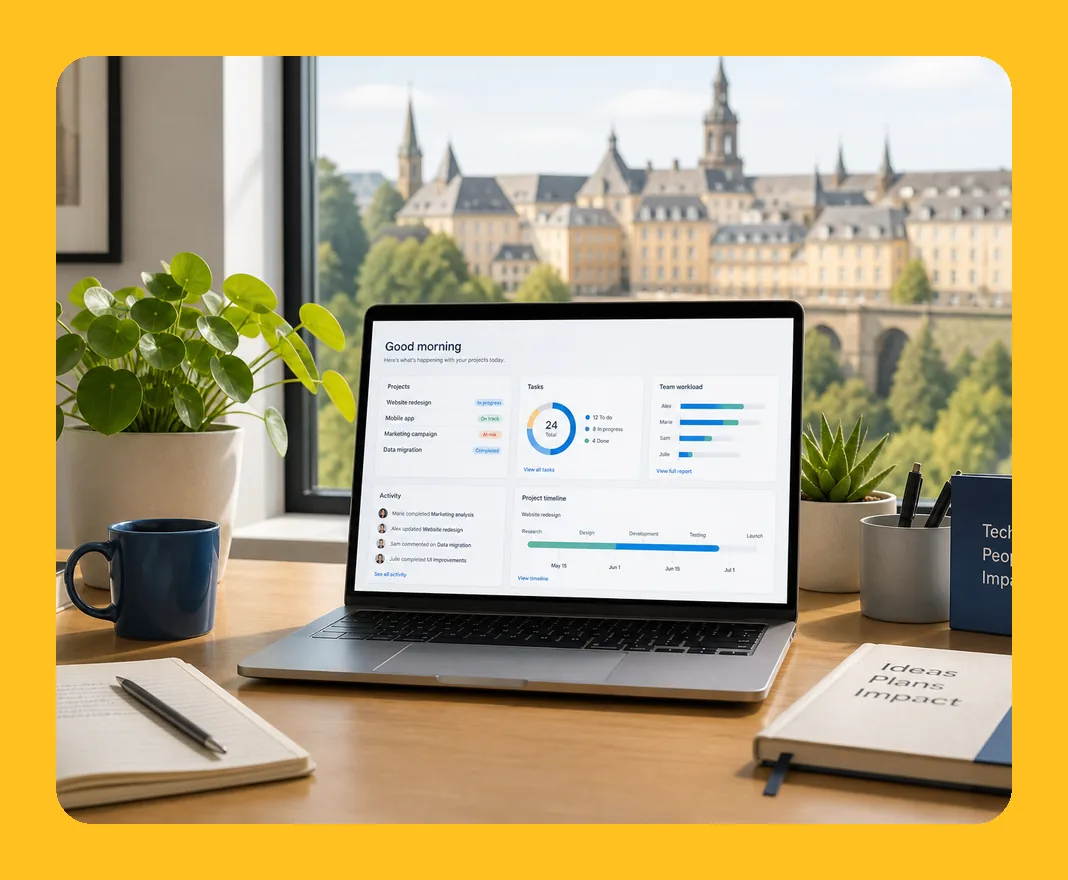

How a modern website grows your customers
A modern website grows your customer base when it works together with your digital marketing: ads, social media, email and search bring the right people in, and a fast, clear, mobile-friendly website turns those visits into enquiries and sales. Below: which channels to pick, how to connect them to your site, and what to measure.
Picture a local coffee shop owner serving the best specialty coffee, but foot traffic has levelled off. One day, a customer mentions finding the shop through an Instagram ad that led to its clean, easy-to-use website. That is what combining digital marketing with a modern website does: it turns casual browsers into regular customers.
Digital marketing covers social media campaigns, email campaigns, SEO and paid ads, all ways to get attention. A modern website is your digital storefront: it gives visitors a smooth experience and turns them into buyers. Marketing brings people in where they already spend time online; a well-designed website makes sure they stay, learn about your offer and take the next step. Each side makes the other work better.
Which digital marketing channels should you choose?
Not every platform suits every business. Choose channels that match your audience's habits and your goals. Start with where your potential customers already are online, whether that's LinkedIn for B2B contacts or TikTok for a younger audience, and mix organic and paid efforts without stretching your resources.
- Social media: use channels like Facebook and Instagram for visual storytelling and community building.
- Search engine optimisation (SEO): optimise your content to rank higher on Google and draw organic traffic over time.
- Email marketing: build lists for personal campaigns that turn leads into repeat customers.
- Pay-per-click (PPC) ads: use targeted ads on Google or social media for immediate, measurable visibility.
For example, the coffee shop owner might run Instagram ads showing daily specials, linking straight to a page with an online order form. That brings in sales now and collects data for retargeting later. Or a freelance graphic designer might promote portfolio highlights on LinkedIn, sending visitors to a modern website with interactive galleries. At 8digit, we often help clients through this choice, keeping it practical and free of unnecessary complexity.
How do your website and marketing work together?
Treat digital marketing and your website as parts of one strategy. Your marketing messages should match your website content, so your brand sounds the same everywhere and builds trust. Let data from both sides guide your adjustments.
"The best marketing doesn't feel like marketing." – Tom Fishburne, Marketoonist
In practice, think of your digital efforts as helpful conversations rather than sales pitches. If a blog post promoted by email discusses industry trends, it should link to a resource page on your website with something useful to download. This grows your customer base and builds loyalty, turning one-time visitors into advocates.
What makes a website a strong online presence?
Your website should be the hub of all your digital activity: fast, mobile-friendly and intuitive, with every campaign pointing back to it. Map the journey from ad click to enquiry and make sure every step feels natural.
- Mobile-friendly: make sure your site adapts to all devices, because many visitors arrive on their phones.
- Clear navigation: use simple menus and calls to action that guide visitors to key pages like your services or contact form.
- Useful content: write content that answers your customers' real questions, using the words they search for.
- Security: use HTTPS and clear trust signals, so visitors feel safe getting in touch or buying.
A clear visual hierarchy helps visitors find what matters:
- One clear headline per page that says what you offer.
- One main call to action per page, so visitors know the next step.
- Enough white space, so the important parts stand out.
Not sure whether your current site does this? Tell us about it through the contact form and we'll take a look.
Why does accessibility matter?
An accessible website reaches more people and is easier for everyone to use. Alt text for images, keyboard navigation and good contrast help everyone, including people with disabilities, use your content. Combined with digital marketing, this means your campaigns reach more people, whatever their background or abilities.
Accessibility also shows that you care about all your visitors. Clear alt text and a clean page structure help search engines understand your content too. At 8digit, we build with accessibility basics in mind, so more of your potential customers can use your site.
How do you measure and improve results?
Keep testing and refining. Use tools like Google Analytics to see how your marketing sends visitors to your site and where they drop off, then improve step by step: A/B test landing pages or refine your ad copy. More advanced options include AI-based personalised recommendations on your website, or chatbots that help visitors arriving from your campaigns.
Tell stories across channels, too. Share customer success stories on social media that link to detailed case studies on your site; each one draws new people in. Good strategies evolve, so review your setup regularly to keep up with trends like voice search and new platforms. 8digit can help with these improvements, so you can focus on running your business.
Want to know what a website costs? Read template or custom website: prices in Luxembourg.
FAQ
How can a modern website grow my customer base?
A modern website grows your customer base by turning visitors from ads, social media, email and search into enquiries and sales. It works best when it is fast, clear and mobile-friendly, and when your marketing messages match what visitors find on the site.
Which digital marketing channels should a small business start with?
Start where your customers already are online. Common options are social media, SEO, email marketing and pay-per-click ads; pick the one or two that match your audience and goals, and link each campaign to a relevant page on your website.
How much does a website from 8digit cost?
Template websites start at €2,500 and custom websites at €5,000, both incl. 17% TVA. Every 8digit website is built in Webflow as a one-time project with a fixed quote. Hosting is €49 per month incl. 17% TVA, or you can choose the optional Care plan, from €149 per month incl. 17% TVA, which includes hosting, updates and small changes.
Can 8digit improve my existing website?
8digit builds only in Webflow. If your current site is on another platform, we rebuild it as a new Webflow project, either recreating and improving your current design or starting from a template to save cost and time.
8digit builds websites in Webflow (template websites from €2,500 and custom websites from €5,000 incl. 17% TVA) and also offers IT support for businesses in Luxembourg. See what's included on our website page, or use the contact form to tell us about your plans, ask a question or request a meeting. We reply within 2–3 business days, usually sooner.